Viscolite
Fast. Tough. Easy to Use
3 Simple Steps
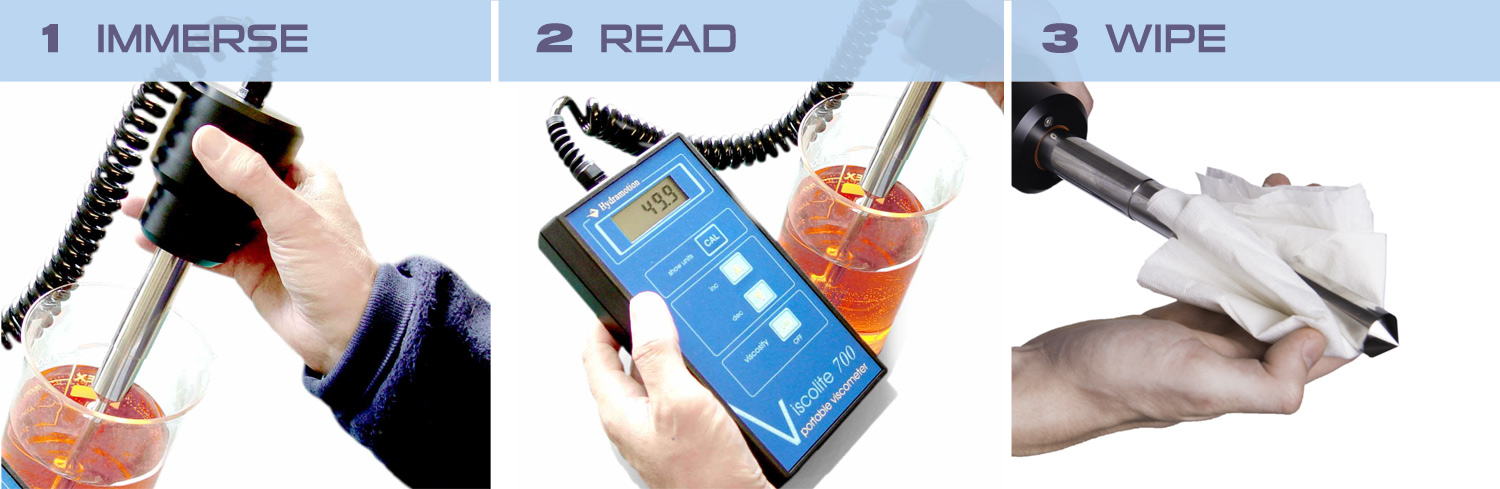
Dip And Read.
That’s all it takes to use the Viscolite. No setting up or taking samples.
Simply immerse the solid stainless steel sensor into the fluid to obtain immediate viscosity and temperature measurements.
Any fluid volume, just dip the tip – and read.
The fastest, most portable viscometer in the world
Precision. Speed. Freedom.
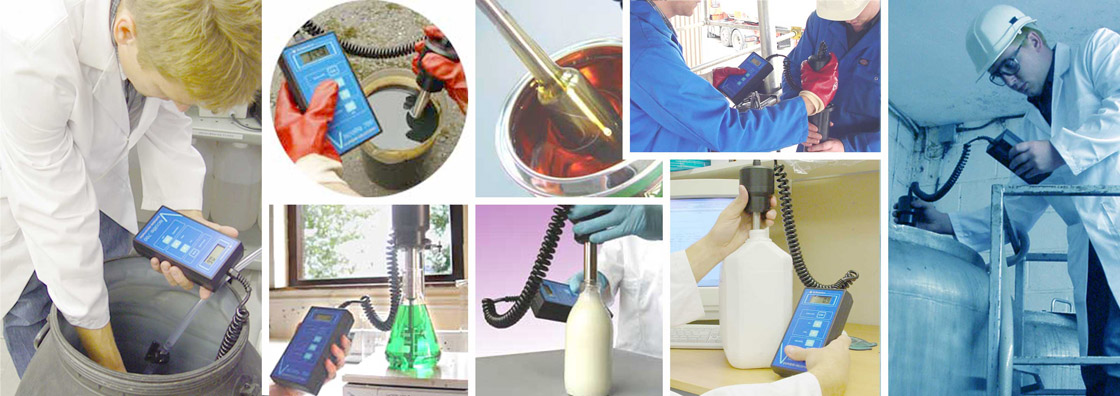
Unlike other viscometers the Viscolite measurement is unaffected by the size of vessels holding the fluid. Anything from a test-tube to full tank.
It is also extremely tough and portable. So you can use it freely anywhere. Instant high precision viscosity in the lab, on factory floor or on the move and remain completely inert to the reaction.
Accurate
& Tough
The Viscolite is amazingly robust – able to withstand the most heavy-handed use without sacrificing its outstanding accuracy and sensitivity.
YOU CAN EVEN STIR THE FLUID WITH IT!
The absence of any moving parts, seals or bearings means routine maintenance is virtually eliminated.
All hand-held viscometers are factory-calibrated and come complete with their own carrying case, User Manual, and Calibration Certificate.
Explore the Knowledge Hub
Viscosity BasicsIn any fluid, there is always some attractive force between the atoms or molecules. As the fluid molecules slide…Learn More > |
What is Viscosity?Viscosity is a measure of the resistance of a fluid to flow. This resistance arises from the attractive forces between…Learn More > |
Measuring InlineUnderstanding and controlling viscosity is crucial to ensure optimal process performance and product quality…Learn More > |